
Protein is an essential macronutrient and is needed for several functions including skin, hair and nail growth, tissue repair, energy, enzyme, and hormone production, and blood sugar regulation.
Not only does protein serve several different functions, it also can help shed extra pounds. Below are five ways protein can help support weight loss.
Protein Burns More Calories to Digest:
When we eat protein, it takes 30% more energy to digest and absorb in our bodies compared to carbohydrates or fats. This means that our bodies have to use more energy (which helps boost our metabolism) in order to digest foods containing protein.
Protein May Reduce Sugar Cravings:
Sugar cravings can easily inhibit the bodies ability to lose weight. Fortunately, studies have found that consuming a high protein meal (especially in the morning) can help regulate satiety and our appetite hormones. So when we feel full and our appetite hormones are balanced, sugar cravings can decrease (1).
Protein Support Muscle Growth:
Sometimes when a person loses weight, they lose muscle mass first before they lose fat. Fortunately, focusing on increasing protein in the diet can help prevent that. Studies have found that a high protein intake can help prevent loss of muscle mass since protein consists of amino acids that promote muscle growth (2).
Protein Helps Keep You Feeling Full:
Studies have found that increasing protein in the diet can lead to an increase in satiety. Many clients of mine have discovered they actually eat less food once they increase their protein consumption because they feel full much faster. Think about it – a plate of eggs in the morning is going to sustain you a lot longer than a bowl of cereal (3).
Protein is a Building Block for Neurotransmitters:
After we consume protein, our bodies break it down into amino acids. Those amino acids are a vital component to the development of our feel-good neurotransmitters (brain chemicals) such as dopamine. When we have more feel-good brain chemicals developing, we are more likely to get off the couch to exercise, cook, and de-stress. In return, those actions can lead to shedding some pounds.
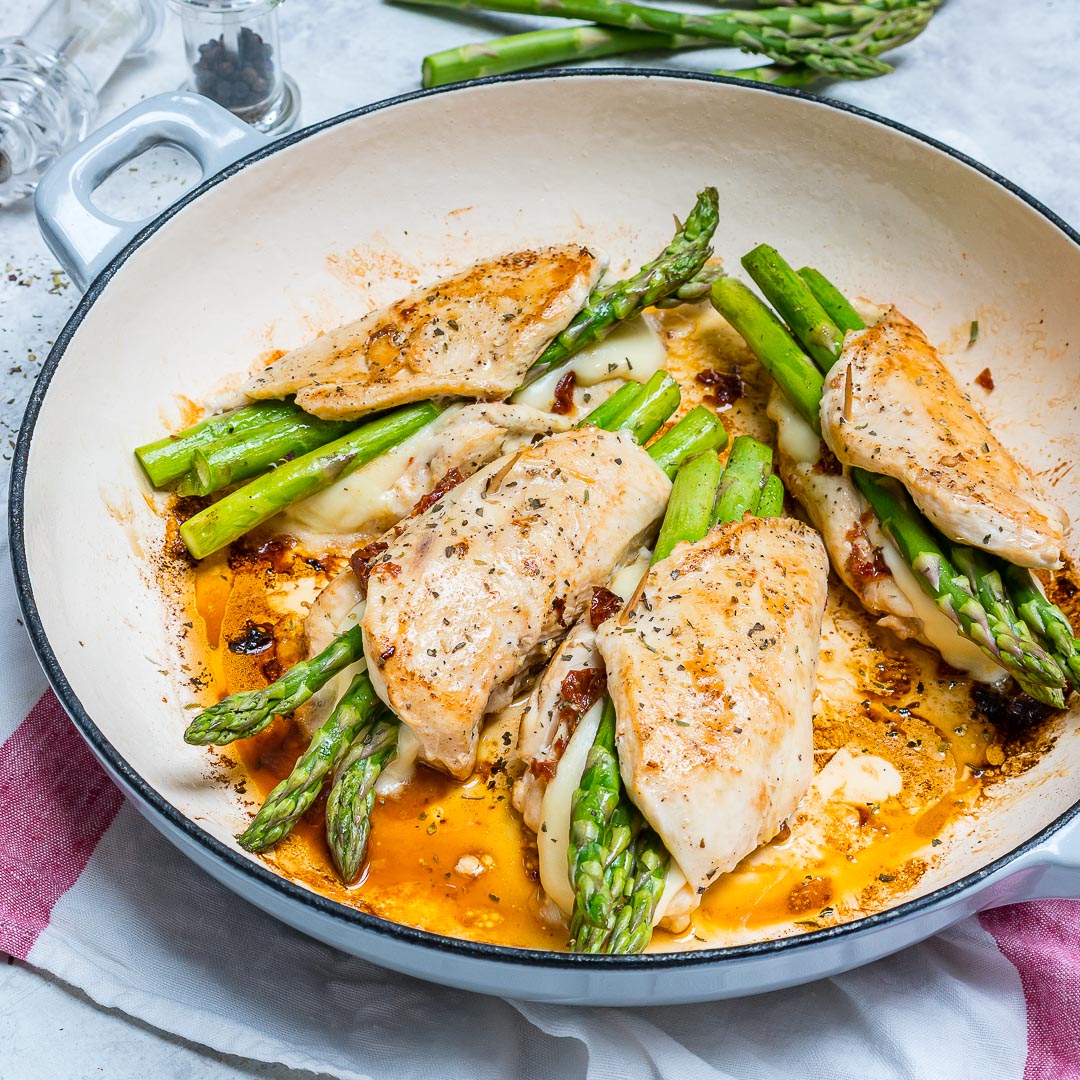 Eat Clean: Asparagus & Sundried Tomato Stuffed Chicken Skillet Recipe
How Much Protein Should You Consume?
The RDA for protein is .8-1 grams per kilogram body weight. In order to find the kilograms, you can simply take your weight in pounds and divide it by 2.2. For example, if someone weighs 160 pounds, they should consume 58-72 grams of protein per day.
Remember that protein needs differ depending on gender, activity level, stress, and nutrition goals. In general, protein should consist of 30% of your total daily calories. Aim to consume 20-25 grams of protein at meals, and about half of that amount at snacks.
Good Sources of Protein:
Protein can be found in a variety of foods. It’s best to consume sources of protein from complete proteins (such as meat) vs. incomplete proteins (such as beans) because they are easier for our bodies to utilize.
Below is a list of high protein sources you can incorporate into your diet:
- Organic, grass-fed meat such as beef, chicken, turkey or pork
- Wild caught fish such as salmon, tuna, or sardines
- Organic, pastured raised eggs
- Nitrate-free deli meats and jerky
- Organic dairy such as plain Greek yogurt or cheese
- Nuts and seeds such as almonds, walnuts, or sesame seeds
- Nut butter such as natural peanut butter or almond butter
- Grass-Fed Gelatin Powder
How to Add More Protein Into Your Diet:
An easy way to increase your protein intake is to plan your meals first around your protein source. Then you can simply build your plate from there by adding in vegetables, fruit, dairy, grains, etc.
Here are some great protein-rich weight loss recipes to try:
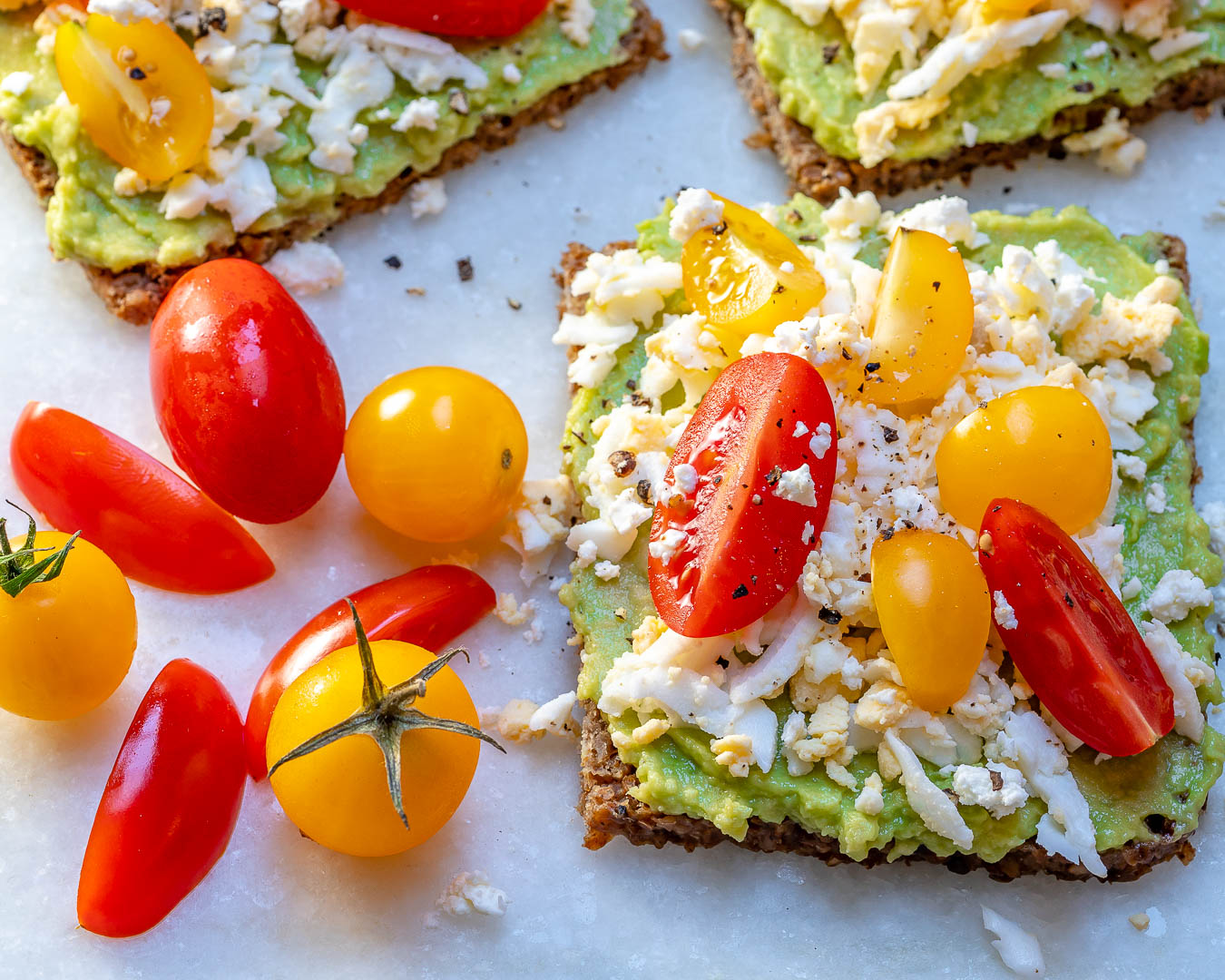
Grated Egg + Avocado Toast for the Perfect Quick & Clean Protein Snack
Clean Eating Turkey Bolognese (High Protein, Gluten Free)
Protein Packed Buffalo Chicken Cob
Along with that, here are some other ways to increase your protein consumption:
- Swap toast or oatmeal in the morning for eggs
- Have fruit with natural peanut butter, cheese, or nuts for snacks
- Mix in gelatin powder to your morning coffee or tea
- Top salads with chicken or salmon
- Switch to Greek yogurt instead of regular yogurt (it has double the amount of protein!)
- Add protein powder to smoothies
Conclusion:
Protein is an essential part of a balanced diet. It serves several important functions and can help promote weight loss. Consuming too much protein can lead to problems though, so remember to balance your intake with good quality carbohydrates and healthy fats as well.
from Clean Food Crush https://ift.tt/2x9rZE5


No comments:
Post a Comment